 Jeedeson Official Website
Bamboo Flooring
Bamboo flooring is not wood. It is a grass, cut into strips, treated and pressed into planks — and that is why it can be harder than oak, cost less than hardwood, and be ready to harvest in five years instead of sixty.
Showing all 9 results
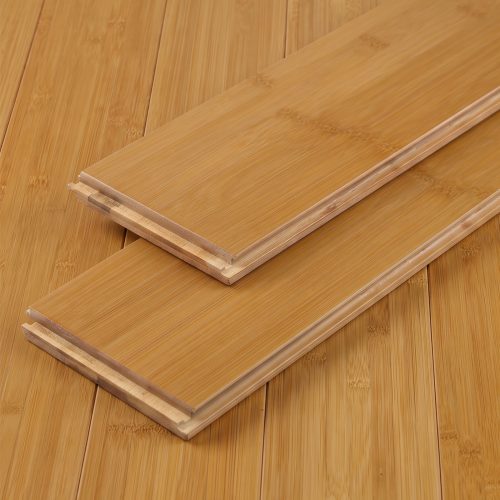
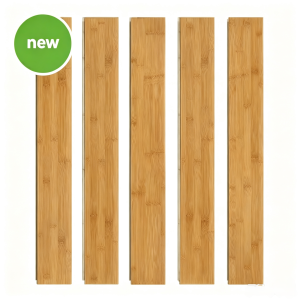
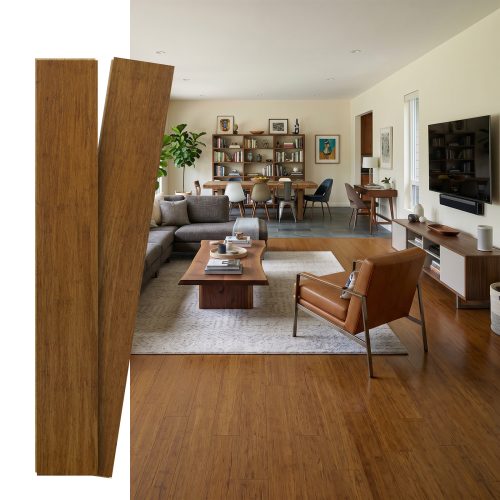
Strand Woven Bamboo Flooring, Solid Carbonized, Commercial Grade, 30% Harder Than Oak, Coffee, 12mm, 18.3 sq ft/Case
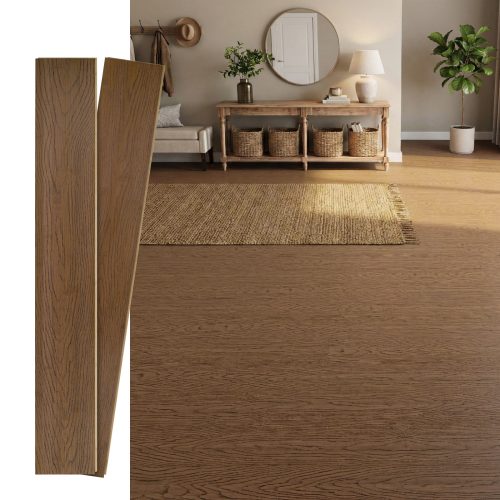
Walnut Flooring in Solid Bamboo, Embossed Wood Grain, 5.11″ Wide Plank, Tongue & Groove, Gloss 10 Matte, 15mm, 20 sq ft/Case
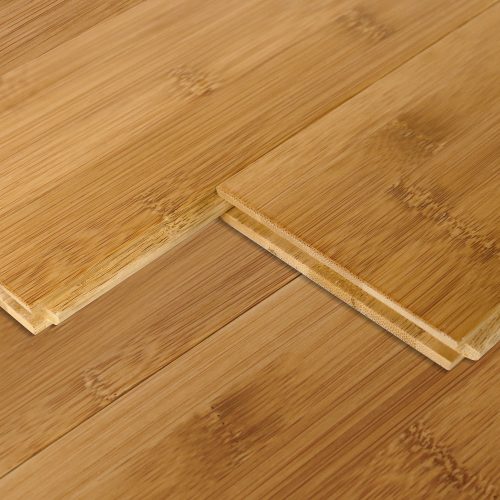
Horizontal Bamboo Flooring, Solid 3.78″ Narrow Plank, Tongue & Groove, Refinishable, 15mm Honey, 19.8 sq ft/Case
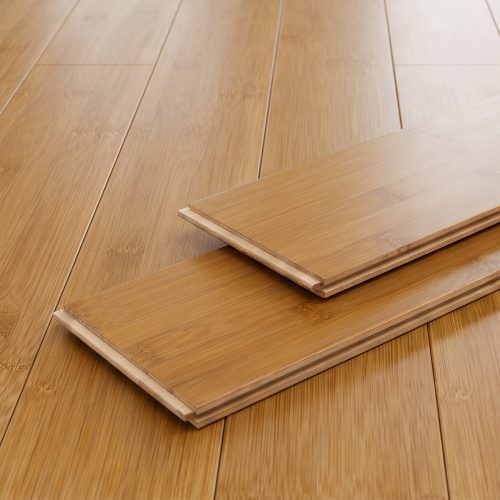
Matte Bamboo Flooring, Gloss 10 Low Reflection, Wide Plank, Hides Dust & Scuffs, 15mm Honey, 20 sq ft/Case
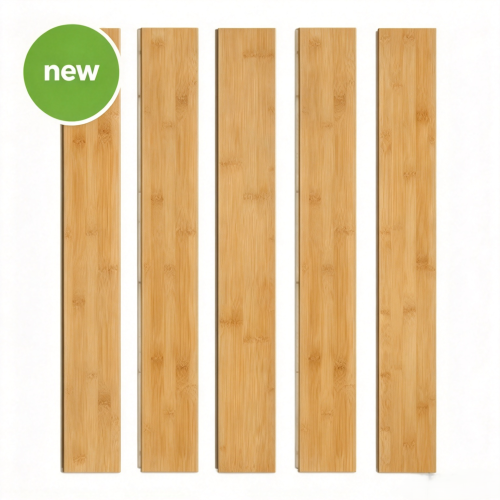
Wide Plank Bamboo Hardwood Flooring, 5.11″ Solid Planks, Tongue & Groove, Gloss 30, 15mm Light Honey, 20 sq ft/Case
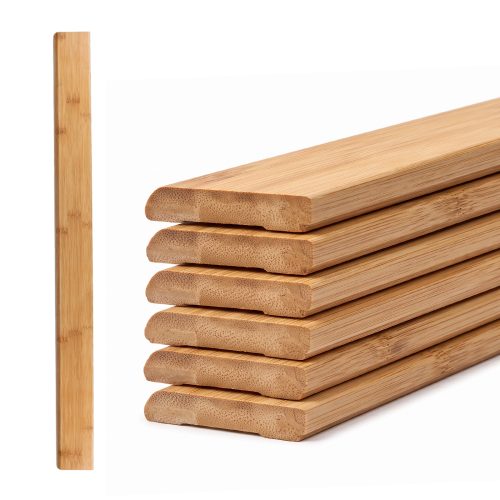
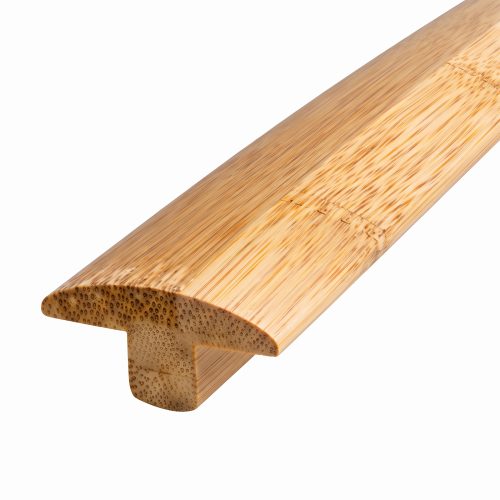
What Is Bamboo Flooring?
Bamboo poles are split into strips, boiled or carbonised to even out the colour, coated in adhesive and pressed into a board under heat. How those strips are arranged decides everything about how the floor behaves:
- Strand woven — the strips are crushed into fibres, soaked in adhesive and pressed into a dense block. This is the hardest version, and the one that behaves most like a hardwood.
- Horizontal — the strips lie flat side by side, so you see the bamboo’s natural grain and node pattern across the plank. Softer than strand woven, but it can be sanded and refinished.
- Solid bamboo flooring — a milled bamboo board rather than an engineered core with a bamboo skin. It takes a nail, a refinish and a heavy footfall, and it is what every floor below is.
One thing worth clearing up, because it confuses almost everyone: click lock is a fitting method, not a structure. A click lock floor can be strand woven or solid; what it means is that the planks clip together and float over the subfloor with no glue and no nails. Tongue and groove is the traditional joint, fixed down with adhesive or cleats.
If you have been comparing GBS sustainable bamboo flooring with other brands, the useful number to ask every supplier for is the formaldehyde test report. Bamboo is genuinely a low-impact material — the adhesive is where the difference hides, and it is the one spec most listings leave out.
Strand Woven vs Horizontal: Which Lasts Longer
Strand woven, every time, if the floor is going to take punishment. The fibre density is roughly double a horizontal board’s, which is why the strand woven floor we stock is rated 30% harder than oak and why it shrugs off dog claws, kitchen chairs and a commercial doorway.
Horizontal has its own argument: fewer adhesives, a clearer grain, and enough thickness to be sanded back once or twice over its life. In a bedroom or a low-traffic living room, it will outlive the decor.
Rough rule: strand woven for hallways, kitchens, pets and rentals. Horizontal for bedrooms and rooms you plan to keep for twenty years.
Locking Bamboo Flooring vs Tongue and Groove
Locking bamboo flooring and click lock bamboo flooring are the same floor under two names. The planks are milled with a profile that clicks into the board beside it, the whole floor floats over the underlay, and nothing is glued or nailed to the subfloor. If a listing says “click” and you were searching for “locking”, it is the same joint.
What the joint decides:
- Installation — a locking floor is a saw, a spacer kit and a skirting board. Two people can lay 300 sq ft in a day. A tongue and groove floor has to be nailed or glued, and the first row has to be dead straight or the whole room runs out of square.
- Removal — a locking floor comes up again in an afternoon without destroying the planks. In a rental, or in a room you might convert in five years, that is the entire argument.
- Subfloor — locking planks go straight over concrete, tile or an existing hard floor with the right underlay. Tongue and groove needs a plywood subfloor to take a cleat.
- Movement — a floating floor moves as one sheet, so it needs an expansion gap at every wall. A nailed floor moves less, board by board.
- Feel — this is the honest trade-off. A nailed 15 mm board feels deader underfoot than a floating one. Put the two side by side in a showroom and the glued floor always feels the more solid of the pair.
Both joints live in the range below: the two click lock floors are locking, the five tongue and groove floors are fixed down. Neither is the better joint — locking is the right answer over a slab or in a rental, nailed is the right answer in a house you are staying in.
Which Room It Works In
Living rooms, bedrooms, dining rooms, hallways and kitchens — all fine. The kitchen caveat is water: wipe spills rather than letting them sit, and put a mat at the sink.
Bathrooms are the one place we would not put bamboo. This is a water-resistant floor, not a waterproof one — a bamboo board swells when water gets into the joint and does not come back. For a bathroom or a basement, use SPC or sheet vinyl instead; both are genuinely waterproof and we sell them on the same site.
Underfloor heating is fine with a water-based (hydronic) system, keeping the surface below 27°C / 80°F. Ask us before laying over an electric mat.
Colour matters more than people expect. A light bamboo flooring opens up a narrow hallway or a north-facing room; the embossed walnut does the opposite and makes a large open-plan space feel warmer.
How to Choose Thickness: 12 mm vs 15 mm
Most of our range is 15 mm. It feels solid underfoot, holds heat well, takes a refinish, and sits at the same height as most existing floors — which matters if you are replacing like for like without rehanging doors.
12 mm is the strand woven floor. It is lighter, slightly harder underfoot, and the right pick when floor height is tight: a renovation over an existing tile floor, or a doorway with no clearance to spare.
Either way, check the coverage per case before you order. Cases run 18.3 to 20 sq ft, and a 10 x 12 ft room needs about seven of them once you allow for cuts.
Bamboo Flooring vs Laminate: Not the Same Board
If you are weighing up bamboo flooring options against laminate, separate the two before you compare price, because they are not built the same way. Laminate is a photographic print of wood glued to a high-density fibreboard core. Bamboo flooring is a solid board — the grass itself, pressed. That one difference decides everything in the table below.
| Solid bamboo | Laminate | |
|---|---|---|
| Core | Solid bamboo, all the way through | HDF fibreboard with a printed image on top |
| Refinishing | Can be sanded and recoated two or three times | Cannot be sanded — the print layer is microns thick |
| Water | Water-resistant; a joint will swell if standing water sits in it | Varies by product; a soaked core crumbles and cannot be repaired |
| Working life | About 25 years as a surface | 10 to 15 years |
| Underfoot | Hard, cool, sounds like a solid floor | Hard, slightly hollow, louder |
| Price | From $7.00 per sq ft across this range | Usually cheaper up front |
The short version: laminate is cheaper to buy and cheaper to replace, bamboo is a floor you sand back instead of pulling out. In a room you will still be standing in at year fifteen, the solid board wins on cost per year of use. In a flat you are renting out for three years, laminate is the rational buy — and we would say so.
Compare the Range
Five of the seven are light bamboo flooring in a pale honey tone, which is what keeps a small or north-facing room looking bright. The other two — carbonised coffee and embossed walnut — are dark by design.
| Product | Construction | Width | Thickness | Per case | Price per case | Per sq ft |
|---|---|---|---|---|---|---|
| Water-Resistant Click Lock Bamboo Flooring, 5.12″ Wide Plank, Honey | Click lock, floating | 5.12 in | 15 mm | 20 sq ft | $145.00 | $7.25 |
| Floating Click Lock Bamboo Flooring, 3.78″ Narrow Plank, Honey | Click lock, floating | 3.78 in | 15 mm | 19.8 sq ft | $149.00 | $7.53 |
| Strand Woven Bamboo Flooring, Carbonized Coffee | Strand woven | 5.2 in | 12 mm | 18.3 sq ft | $149.00 | $8.14 |
| Dark Bamboo Flooring, Walnut Embossed, Gloss 10 | Tongue & groove, embossed | 5.11 in | 15 mm | 20 sq ft | $139.99 | $7.00 |
| Horizontal Bamboo Flooring, 3.78″ Narrow Plank, Honey | Horizontal, tongue & groove | 3.78 in | 15 mm | 19.8 sq ft | $159.00 | $8.03 |
| Matte Bamboo Flooring, Gloss 10 Wide Plank, Honey | Tongue & groove, matte | 5.11 in | 15 mm | 20 sq ft | $156.00 | $7.80 |
| Wide Plank Bamboo Flooring, Gloss 30, Light Honey | Tongue & groove, wide plank | 5.11 in | 15 mm | 20 sq ft | $156.00 | $7.80 |
All seven are sold by the case. Sample pieces are available on each product page if you want to see the colour against your own light before ordering a room’s worth.
Frequently Asked Questions
| Question | Answer |
|---|---|
| Is bamboo flooring waterproof? | No, and any listing that says otherwise is overselling it. It is water-resistant: spills are fine if you wipe them up, and a damp mop is fine. Standing water in a joint will swell the board permanently. For bathrooms, use SPC or vinyl instead. |
| Can I install it myself? | The two click lock floors, yes — a saw, a spacer kit and a skirting board are the whole job, and no adhesive is needed. The tongue and groove floors are better left to a fitter, because they need nailing or gluing and the first row has to be dead straight. |
| Is solid bamboo flooring harder to fit than engineered? | It is heavier, and it is less forgiving of an uneven subfloor. The click lock floors are DIY-friendly; the tongue and groove ones need nailing or gluing and a dead-straight first row. The prep is the job, not the laying. |
| Can bamboo go over underfloor heating? | Over a water-based system, yes, with the surface kept below 27°C / 80°F. Bamboo moves with heat, so the floor needs an expansion gap at every wall. Ask us before installing over electric mat heating. |
| What is the formaldehyde level? | Our bamboo floors use low-emission adhesive and are made to E1. Ask us for the test report for the batch you are ordering and we will send it — treat any supplier who cannot produce one with suspicion. |
| How much does bamboo flooring cost per square foot? | Across this range, $7.00 to $8.14 per sq ft, based on the case price and coverage shown above. A 120 sq ft room works out at roughly $840 to $980 in flooring, before underlay and trims. |
| What is locking bamboo flooring? | The same thing as click lock: planks milled with a profile that clips together over an underlay, with no glue and no nails. Both click lock floors in this range are locking; the other five are tongue and groove and need fixing down. |
| Is bamboo flooring better than laminate? | Longer-lived, yes. A solid bamboo board can be sanded and recoated; laminate cannot, so bamboo runs about 25 years against 10 to 15 for laminate. Laminate is cheaper up front. Buy bamboo if the room is a long hold, laminate if it is a short one. |